Children with Malice Hanged in Early England
Today, a small stone marker in the pavement is the only reminder that this was the site of London’s public hangings for nearly 600 years.
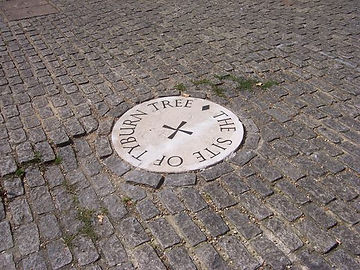
The Tyburn Tree was not a tree at all, but rather a wooden gallows where felons were executed in front of crowds that could number in the thousands. The 'tree' was a triangular-shaped scaffold with three beams that could hang up to 24 people at once.
The first recorded execution at the site dates as far back as 1196, but the wooden gallows weren’t built until 1571. The strange structure became known as the Tyburn Tree.
In the mid-1700s a person could be hanged for stealing a handkerchief, cutting down a tree or for blackening their face at night time.
Living in England in the mid-1700s, a person could be hanged for all these offences. From 1688 to 1815, lawmakers in England introduced the death penalty for a myriad of offences in a bid to deter property loss. Poaching of deer, stealing of rabbits, looting from shipwrecks, pickpocketing… every page of the statue book dripped with the threat of the hanging noose.
By 1800, there were over 220 property-related crimes in English criminal law that were punishable by death. Historians referred to this era of criminal law as the “Bloody Code”.

In 1741, nineteen-year-old Elizabeth Hardy from Norwich was sentenced to hang for stealing goods worth 13 shillings and 6 pence (around $100 today). She was abandoned by her husband and alone in London and driven to theft out of desperation. She was given a last-minute reprieve at the gallows and her sentence was commuted to transportation instead.
Roderick Audrey was a young thief with a way with birds. He had mastered the art of training his pet sparrow at nine years old to fly into London townhouses. He would knock on the door with tears in his eyes and beg the butler to let him in to retrieve his pet sparrow. Once inside, he would grab silver cutlery and stuff them down his pants. If he was seen before finishing his thievery, he would run out of the house as if he were chasing his sparrow, like the innocuous boy he appeared to be.
Audrey was so prolific at stealing that country towns and villages within ten miles of London soon knew that the boy who played with the sparrow was a thief. Audrey’s luck ran out in his teens. In 1714, he was arrested and sentenced to hang at Tyburn. Unlike Elizabeth Hardy, he did not get a reprieve. Audrey was sixteen years old when his life ended.
Children, specifically between the age of seven and twelve, could be sentenced to death if there was evidence of strong malice in them.
In 1629, a boy described as “an infant between eight and nine years” was hanged for setting fire to two barns. His name was John Dean. He was one of the youngest to be sentenced to death in England.
Paul Rushworth-Brown is the author of three novels:
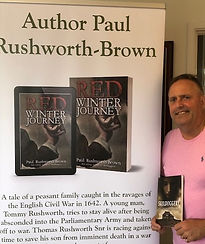

Skulduggery - The bleak Pennine moors of Yorkshire; a beautiful, harsh place, close to the sky, rugged and rough, with no boundaries except the horizon, which in places, went on forever. Green pastures and wayward hills, the colours of ochre, brown and pink in the Spring. Green squares divided the land on one side of the lane, and on the other, sheep with thick wool and dark snouts dotted the hills and dales. The story, set in the Moors of West Yorkshire, follows wee Thomas and his family shortly after losing his father to consumption. Times were tough in 1603 and shenanigans and skulduggery was committed by locals and outsiders alike. Queen Bess has died, and King James sits on the throne of England and Scotland. Thomas Rushworth is now the man of the house the older of two boys. He is set to wed Agnes in an arranged marriage, but a true love story develops between them.
"A glorious read of a period well versed and presented with accuracy and authentic telling by an author as much engrossed in his prose as the reader he shares with...masterful and thoroughly enjoyable...5 stars." Adrian, Indibook reviewer.
''Skulduggery, a different treat for lovers of historical fiction, is an exciting and mysterious romp through the moors of 17th century Yorkshire, specifically Haworth and Keighley. The story is a well-painted image of how 'copyholders' or peasants would have lived at this time, but that is only the backdrop to a suspenseful whodunit with romantic tones. Modern writers usually don't know what it was like to live in the past, but Rushworth-Brown has done this with great skill in this accomplished, atmospheric and thoughtful novel."... Jen Summers
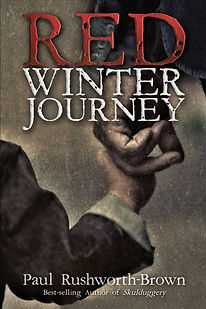
Red Winter Journey- Come on this historic journey, which twists, turns, and surprises until the end. If you like history, adventure and intrigue with a dash of spirited love, then you will be engrossed by this tale of a peasant family unexpectedly getting caught up in the ravages of the English Civil War in 1642.
“A dark and dramatic prose of family and war that brings the realism of history to your imagination with little effort…a great read…”
"Dream of Courage- Soon to be released!

The much-anticipated story of the Rushworth family and their journey out of poverty. King Charles has been executed, and England becomes a Republic under the leadership of Oliver Cromwell. Highwaymen, thief-takers, pirates and wool broggers tell the story in this mysterious and bone-chilling historical thriller.
The Tyburn Tree was not a tree at all, but rather a wooden gallows where felons were executed in front of crowds that could number in the thousands. The 'tree' was a triangular-shaped scaffold with three beams that could hang up to 24 people at once.
The first recorded execution at the site dates as far back as 1196, but the wooden gallows weren’t built until 1571. The strange structure became known as the Tyburn Tree.
In the mid-1700s a person could be hanged for stealing a handkerchief, cutting down a tree or for blackening their face at night time.
Living in England in the mid-1700s, a person could be hanged for all these offences. From 1688 to 1815, lawmakers in England introduced the death penalty for a myriad of offences in a bid to deter property loss. Poaching of deer, stealing of rabbits, looting from shipwrecks, pickpocketing… every page of the statue book dripped with the threat of the hanging noose.
By 1800, there were over 220 property-related crimes in English criminal law that were punishable by death. Historians referred to this era of criminal law as the “Bloody Code”.
In 1741, nineteen-year-old Elizabeth Hardy from Norwich was sentenced to hang for stealing goods worth 13 shillings and 6 pence (around $100 today). She was abandoned by her husband and alone in London and driven to theft out of desperation. She was given a last-minute reprieve at the gallows and her sentence was commuted to transportation instead.
Roderick Audrey was a young thief with a way with birds. He had mastered the art of training his pet sparrow at nine years old to fly into London townhouses. He would knock on the door with tears in his eyes and beg the butler to let him in to retrieve his pet sparrow. Once inside, he would grab silver cutlery and stuff them down his pants. If he was seen before finishing his thievery, he would run out of the house as if he were chasing his sparrow, like the innocuous boy he appeared to be.
Audrey was so prolific at stealing that country towns and villages within ten miles of London soon knew that the boy who played with the sparrow was a thief. Audrey’s luck ran out in his teens. In 1714, he was arrested and sentenced to hang at Tyburn. Unlike Elizabeth Hardy, he did not get a reprieve. Audrey was sixteen years old when his life ended.
Children, specifically between the age of seven and twelve, could be sentenced to death if there was evidence of strong malice in them.
In 1629, a boy described as “an infant between eight and nine years” was hanged for setting fire to two barns. His name was John Dean. He was one of the youngest to be sentenced to death in England.
Paul Rushworth-Brown is the author of three novels:
Skulduggery - The bleak Pennine moors of Yorkshire; a beautiful, harsh place, close to the sky, rugged and rough, with no boundaries except the horizon, which in places, went on forever. Green pastures and wayward hills, the colours of ochre, brown and pink in the Spring. Green squares divided the land on one side of the lane, and on the other, sheep with thick wool and dark snouts dotted the hills and dales. The story, set in the Moors of West Yorkshire, follows wee Thomas and his family shortly after losing his father to consumption. Times were tough in 1603 and shenanigans and skulduggery was committed by locals and outsiders alike. Queen Bess has died, and King James sits on the throne of England and Scotland. Thomas Rushworth is now the man of the house the older of two boys. He is set to wed Agnes in an arranged marriage, but a true love story develops between them.
"A glorious read of a period well versed and presented with accuracy and authentic telling by an author as much engrossed in his prose as the reader he shares with...masterful and thoroughly enjoyable...5 stars." Adrian, Indibook reviewer.
''Skulduggery, a different treat for lovers of historical fiction, is an exciting and mysterious romp through the moors of 17th century Yorkshire, specifically Haworth and Keighley. The story is a well-painted image of how 'copyholders' or peasants would have lived at this time, but that is only the backdrop to a suspenseful whodunit with romantic tones. Modern writers usually don't know what it was like to live in the past, but Rushworth-Brown has done this with great skill in this accomplished, atmospheric and thoughtful novel."... Jen Summers
Red Winter Journey- Come on this historic journey, which twists, turns, and surprises until the end. If you like history, adventure and intrigue with a dash of spirited love, then you will be engrossed by this tale of a peasant family unexpectedly getting caught up in the ravages of the English Civil War in 1642.
“A dark and dramatic prose of family and war that brings the realism of history to your imagination with little effort…a great read…”
"Dream of Courage- Soon to be released!
The much-anticipated story of the Rushworth family and their journey out of poverty. King Charles has been executed, and England becomes a Republic under the leadership of Oliver Cromwell. Highwaymen, thief-takers, pirates and wool broggers tell the story in this mysterious and bone-chilling historical thriller.

